Avoid Wi-Fi Extenders If Possible
Basic repeaters:
- Reduce speed because they retransmit traffic
- Can increase latency
- Often create a separate network name
Mesh systems generally provide a much better experience.
6. Use the Right Wi-Fi Band
- 2.4 GHz: Longer range, slower speeds, better through walls.
- 5 GHz: Faster speeds, shorter range.
- 6 GHz (Wi-Fi 6E/7): Fastest, shortest range.
Modern routers automatically steer devices to the best band.
7. Update Your Equipment
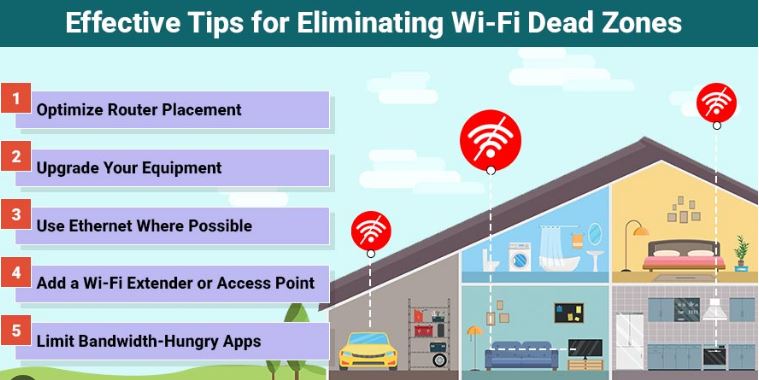
If your router is more than five years old, replacing it with a Wi-Fi 6 or Wi-Fi 7 model can improve both coverage and performance.
8. Optimize Channels
In crowded neighborhoods:
- Use channels 1, 6, or 11 on 2.4 GHz.
- Use less congested channels on 5 GHz.
Many modern routers can select the best channel automatically.
9. Consider Powerline Adapters
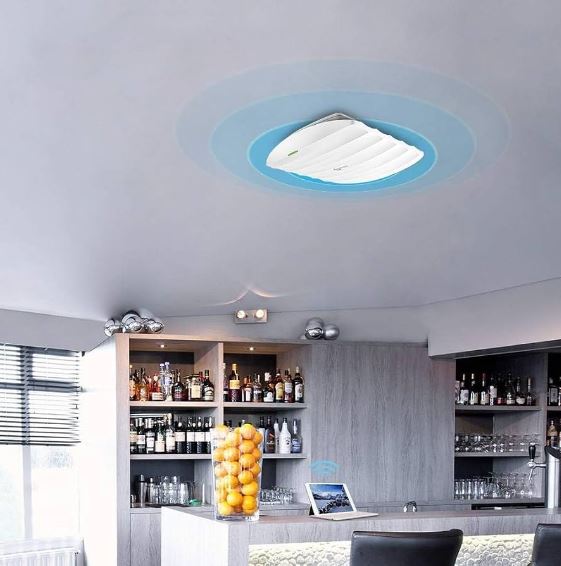
If running Ethernet isn't practical, powerline adapters can use your home's electrical wiring to connect an access point in another area. Performance depends on your home's electrical wiring quality.
Recommended by Home Size
| Home Size | Recommended Solution |
|---|
| Up to 1,500 sq ft | One good Wi-Fi 6 router |
| 1,500–3,000 sq ft | Two- or three-node mesh system |
| 3,000–5,000 sq ft | Three- or four-node mesh system or wired access points |
| Over 5,000 sq ft | Multiple wired access points with a central router |
If you're comfortable with networking, a wired access point system (such as UniFi) provides the highest performance. For most homeowners, a quality mesh Wi-Fi system offers the best balance of simplicity and coverage.
If you tell me:
- the square footage of your house,
- the number of floors,
- your internet speed, and
- your current router model,
I can recommend the ideal setup and the number of access points or mesh nodes you'll need


 Cordless Phones